



Types of Partial Dentures
Depending on your needs, budget and lifestyle, your dentist may recommend one of several types of partials.
Acrylic Partials
Often the most affordable option and commonly used as a temporary solution. The replacement teeth sit in a pink acrylic base that blends with your gums. They may be less durable and can feel bulkier than other options.
Metal Framework Partials
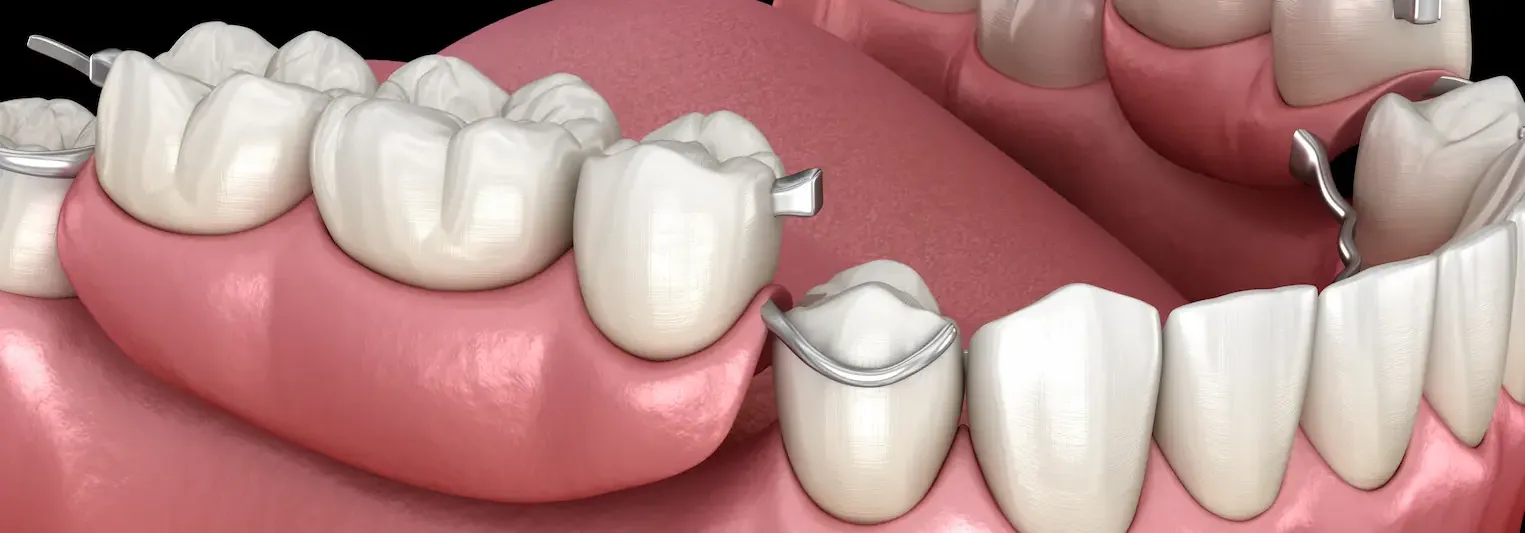
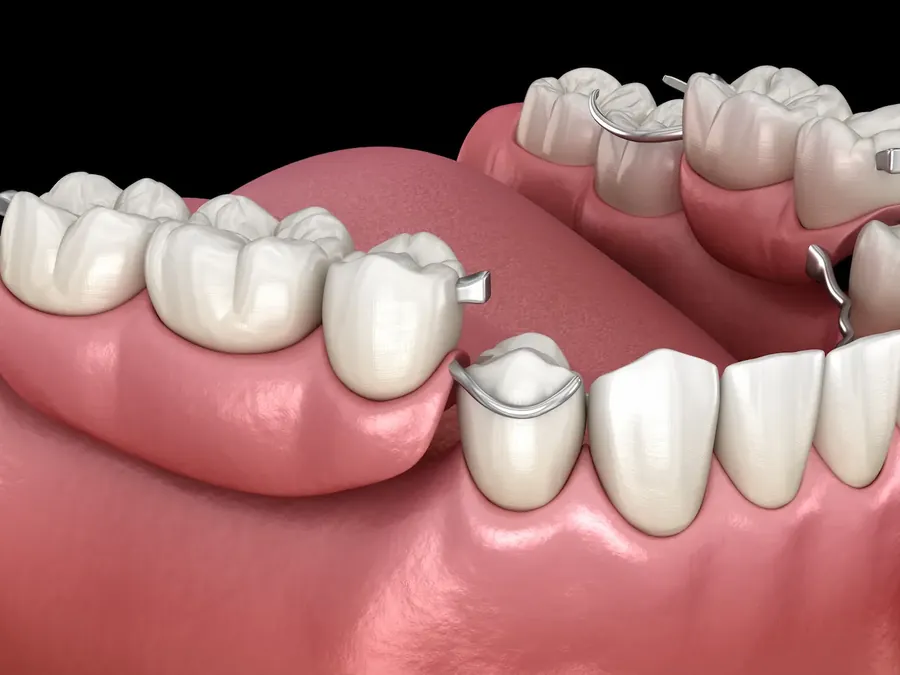
Known for strength and stability. A thin but strong metal base keeps them lightweight and less bulky, and metal clasps anchor securely to your natural teeth, making them a good long-term choice.
Flexible Partials
Made from a lightweight, bendable resin with gum-colored clasps that blend with your smile. Many patients find them very comfortable, although they may not last as long as metal-framework partials.
Implant-Supported Partials
For extra stability, a partial can be anchored to dental implants instead of relying on clasps alone. This gives better stability and a more natural feel, at a higher investment. See implant restorations.
Benefits of Partials
Partials make it easier to chew and enjoy your favorite foods, help you speak more clearly and keep neighboring teeth from shifting into the gaps. They are lightweight, easy to wear and usually cost less than implants or bridges, which makes them a good way to restore your confidence while keeping treatment affordable.
Getting Your Partials
We start with a complete exam and consultation to see whether partials are right for you. We take impressions of your teeth and gums so the partial fits comfortably and blends with your smile, and a dental lab makes it from durable materials matched to your teeth in shape, size and color. At your fitting we adjust it for comfort and stability, and follow-up visits keep it working well for years.
Caring for Your Partials
- Take them out and clean them every day with a soft brush and a non-abrasive cleaner.
- Store them in water or denture solution when you’re not wearing them, so they don’t dry out or warp.
- Avoid very hard or sticky foods that can damage the appliance.
- Keep brushing and flossing your natural teeth, and see us regularly so your partials stay comfortable.
Who Is a Candidate for Partials?
A good candidate is missing one or more teeth but still has several healthy teeth to anchor the partial. Those teeth need to be strong and free of severe decay or looseness, and the gums healthy. Any gum disease or infection is treated first so the partial fits well and lasts.
Overall oral health, the health of the jawbone and gums, and your willingness to clean the partial and come in for follow-ups also matter. Age is rarely a limit: partials can be made for younger and older adults as long as the conditions in the mouth are right, although some medical conditions, such as uncontrolled diabetes, can affect healing.
Cost of Partial Dentures
The cost depends on the material and type of partial, how many teeth are replaced and whether other dental work is needed first. Other things that can affect the total:
- Preparatory work: extractions, gum treatment or other care before the partial is made.
- Lab work and customization: tooth and gum color, design, clasps and framework.
- Adjustments, repairs and relines over time.
We will explain your options, give you a clear estimate and help you make the most of your insurance benefits.
Why Choose Us for Partials in Elgin, IL
- Experience: Dr. Martinez has more than 30 years of restorative dentistry experience, so your partial is designed with precision and comfort in mind.
- Custom fit: every partial is made for your smile and blends with your natural teeth.
- Comfort and support: we guide you from the first consultation through follow-up adjustments.
- Affordable care: clear pricing, help with insurance, and monthly payment options through Cherry and CareCredit.
- Part of the community: as an Elgin practice, we treat our patients like family, in English or Spanish.
This page is general information, not medical or dental advice. Please talk with your dentist about your own care.