



Types of Dental Bridges
Your dentist will recommend a bridge based on where the missing tooth is, the health of the surrounding teeth and your overall oral health.
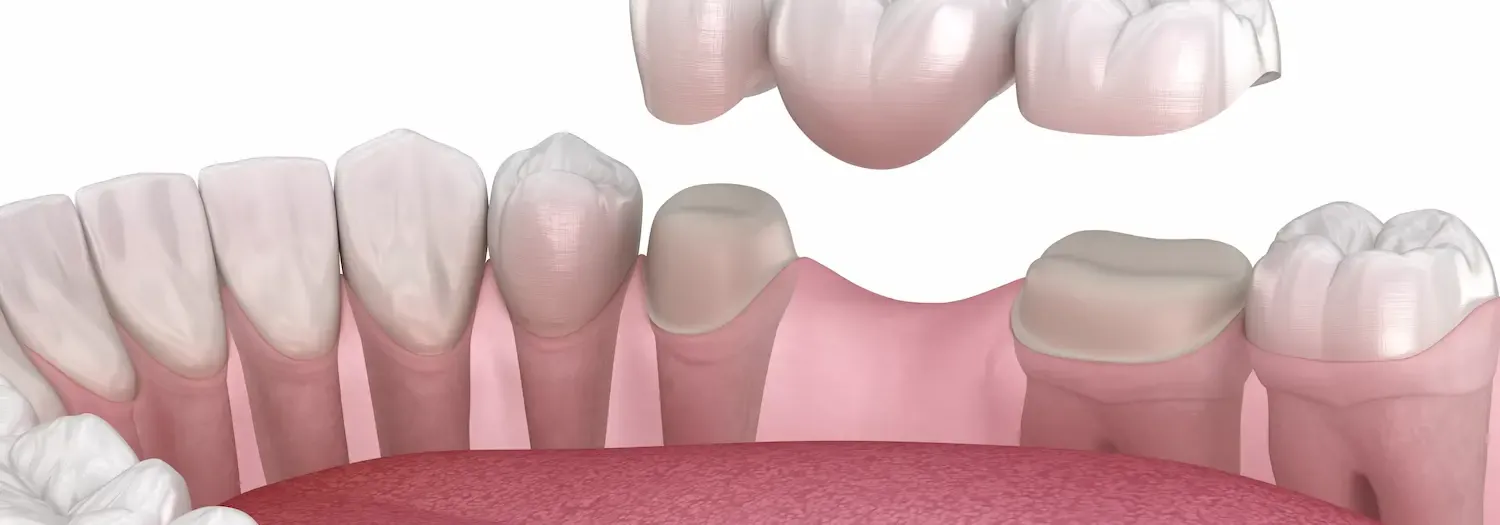
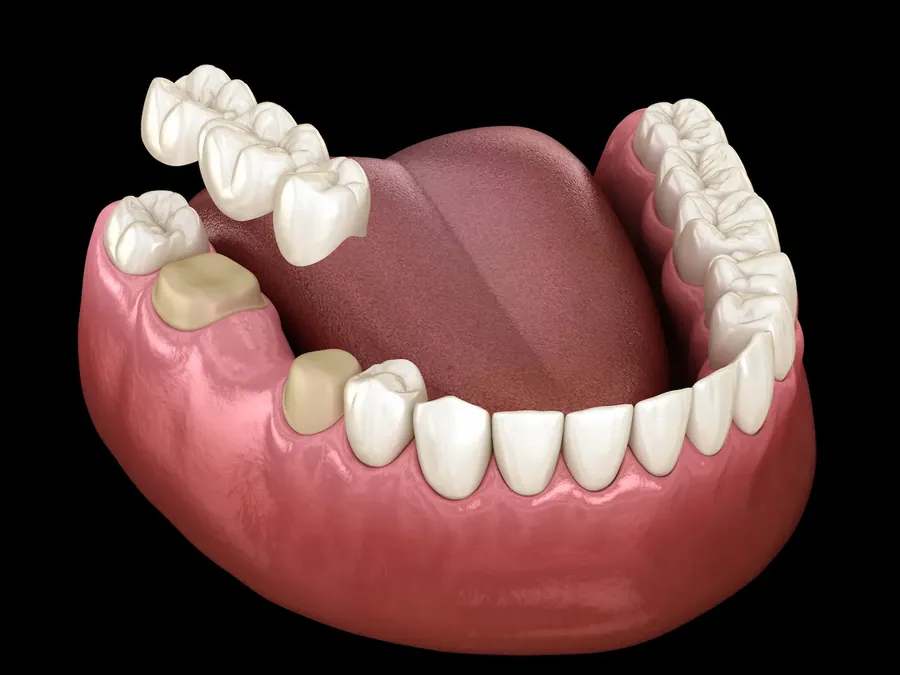
1. Traditional bridges: the most common type. A crown is made for the tooth or implant on each side of the gap, with a pontic in between. They are usually made of porcelain fused to metal or all-ceramic materials and are strong enough to replace molars.
2. Cantilever bridges: used when there is a tooth on only one side of the gap. The pontic is supported by a single crown. Because this puts more stress on one tooth, it is usually used where chewing forces are lighter, such as the front of the mouth.
3. Maryland (resin-bonded) bridges: instead of crowns, a metal or porcelain framework with “wings” is bonded to the back of the neighboring teeth. This preserves more natural tooth, but the bond is not as strong as a traditional bridge, so it suits front teeth.
4. Implant-supported bridges: anchored by dental implants instead of natural teeth. This is a very stable, durable option that also helps preserve the jawbone. If several teeth in a row are missing, a bridge may be supported by two implants rather than one for every tooth.
Benefits of Dental Bridges
- Restores your smile: a bridge fills the gap for a complete, natural-looking smile.
- Improves chewing and speaking: replacing missing teeth makes eating and talking easier.
- Supports your face: missing teeth can lead to bone loss in the jaw. A bridge helps support your lips and cheeks.
- Keeps teeth from shifting: a gap lets neighboring teeth drift and can throw off your bite. A bridge holds them in place.
- Lasts: with good care, a bridge can last 10 to 15 years or longer.
Getting a Dental Bridge: Two Visits
First visit: preparation and impressions. The dentist reshapes the supporting teeth, removing a small amount of enamel to make room for the crowns, and takes impressions that the dental lab uses to make your bridge. You leave with a temporary bridge that protects your teeth and gums in the meantime.
Second visit: fitting the permanent bridge. We remove the temporary bridge, check the fit and color of the new one, adjust it for a comfortable bite, and cement it securely in place.
Cost of Dental Bridges
The cost depends on the type of bridge, the materials (for example porcelain or zirconia) and the number of teeth being replaced. Dental insurance often covers part of the cost. We will give you a detailed estimate after your consultation and review your benefits with you.
Caring for Your Bridge
Good oral hygiene keeps plaque, decay and gum disease away from the supporting teeth and helps your bridge last.
- Brush twice a day and floss daily, paying extra attention around the bridge.
- Use a floss threader or interdental brush to clean under the pontic.
- Come in for checkups and cleanings every six months.
- Eat a balanced diet and limit sugary foods and drinks.
If you’d like your natural teeth to match your new bridge, ask about professional teeth whitening before the bridge is made.
How Do I Clean Under My Bridge?
Cleaning under the bridge is key to making it last. Our hygienists will show you how to use a floss threader, super floss or a water flosser. The American Dental Association also has helpful information on caring for bridges.
Restore Your Smile with a Dental Bridge
A bridge is a proven way to replace missing teeth, restore function and complete your smile. Contact our Elgin office to schedule a consultation; we will look at your needs, explain your options (including partials and implant restorations) and help you decide whether a bridge is right for you.
This page is general information, not medical or dental advice. Please talk with your dentist about your own care.