




Common Dental Emergencies and What to Do
Some problems can wait for a regular appointment; others need a dentist right away.
Severe or Persistent Toothache
A severe, throbbing toothache that won’t go away often means an infection or an abscess, a pocket of pus around the root of a tooth.
- Rinse your mouth with warm salt water to clean the area and reduce inflammation.
- Floss gently around the tooth to remove any trapped food.
- Hold a cold compress on your cheek to ease swelling.
- Don’t put aspirin or any painkiller directly on the gums; it can burn the tissue.
- Call us right away. An untreated abscess can become a serious infection that spreads to other parts of the body.
Chipped, Cracked or Broken Tooth
A fall, a blow to the face or biting something hard can chip or break a tooth. Even a small fracture can expose the sensitive inner layers and lead to pain and infection.
- Rinse your mouth with warm water.
- Save any broken piece in a small container of milk or your saliva.
- Apply a cold compress to reduce swelling.
- Cover a sharp edge with sugar-free gum or dental wax to protect your tongue and cheek.
- Call us for an appointment as soon as possible.
Knocked-Out Tooth
This is one of the most serious dental emergencies, but with quick action the tooth can often be saved. The best chance is within the first 30–60 minutes.
- Find the tooth right away.
- Pick it up by the crown (the chewing surface), never the root.
- If it’s dirty, rinse it gently with water. Don’t scrub it or use soap.
- If you can, place it back in the socket and hold it there by gently biting on gauze.
- If not, keep it in a small container of milk or your saliva, not plain water.
- Get to a dentist within the hour.
Lost Filling or Crown
The exposed tooth is often sensitive and weak, and more likely to decay or break.
- If you have the crown, you can hold it in place temporarily with dental cement or denture adhesive from the pharmacy. Never use super glue.
- For sensitivity, a little clove oil on a cotton swab can give temporary relief.
- Avoid chewing on that tooth.
- Call us to have the filling or crown properly replaced, often with a new crown or tooth-colored filling.
Dental Abscess
An abscess is a serious infection at the root of a tooth or between the tooth and gum. It often looks like a painful, pimple-like bump on the gum.
- Rinse gently with mild salt water several times a day.
- Don’t try to drain it yourself; it needs professional treatment, often a root canal or an extraction.
- Call us right away. Fever, facial swelling or trouble swallowing or breathing need immediate medical care: go to the nearest emergency room or call 911.
How to Handle a Dental Emergency
- Stay calm and look at what happened.
- Call us at (847) 214-1324 and describe the problem. We will tell you what to do and prepare for your visit.
- Manage pain and swelling with over-the-counter pain relievers as directed on the label and a cold compress for 15–20 minutes at a time.
- Control bleeding with firm, gentle pressure from clean gauze or a damp tea bag.
- Save any tooth or pieces as described above.
Why Choose Airlite Dental as Your Emergency Dentist in Elgin?
- Experienced, calm care: Dr. Martinez has more than 30 years of experience and knows how stressful a dental emergency is.
- Digital X-rays: digital imaging helps us find the cause quickly, whether it is an infection, a hidden crack or damage to the bone.
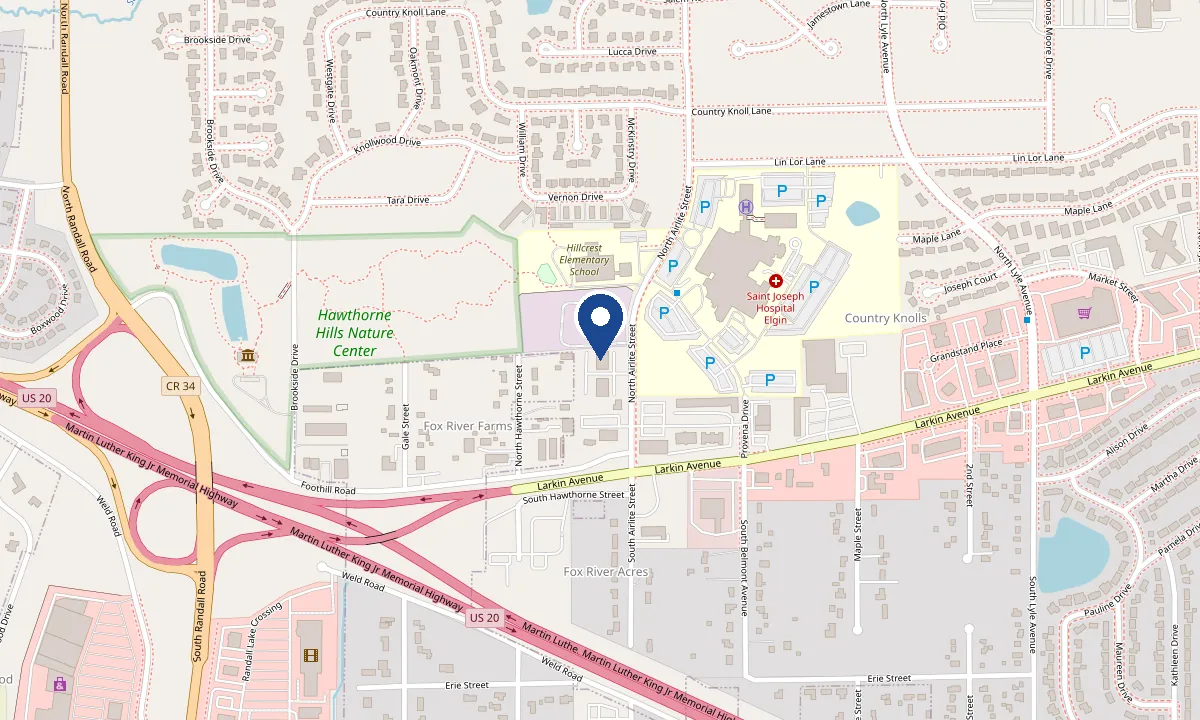
- Close to home: our office at 40 N Airlite St, near Larkin Avenue, is easy to reach from across Elgin and the Fox Valley.
- Complete follow-up care: we relieve the immediate problem and then plan any treatment you need, such as a crown, a root canal or a bridge.
- Se habla español: you can explain what happened in Spanish or English.
This page is general information, not medical or dental advice. Please talk with your dentist about your own care.